Blog
News from Projektron
In our blog, you can regularly read new technical articles and find out what's new and exciting in the world of project management.
Organizing Support and Maintenance After Project Completion
15. October 2026
The project ends, but customer support continues. Here’s how to organize support and maintenance after project completion—with a clear handover, sufficient capacity, and billing that clearly documents the services you provide.

Create Quotes from Project Data: How to Automate Complex Quotes
25. September 2026
Creating quotes from project data means using existing customer, project, product, and technical data automatically in the quote creation process. Instead of manually gathering information from different systems, structured data can flow directly into quote templates, calculations, and customized documents. This saves time, reduces data transfer errors, and enables a high degree of automation even for complex technical quotes.

BCS User Experiences: Ratings, Strengths and Criticism from Real-World Use
15. September 2026
When choosing new project management or ERP software, companies usually look beyond features and pricing. An equally important question is: What experiences do other companies have with the software in their day-to-day work? Here you’ll find a clear overview of what real users think about BCS by Projektron and how the Business Coordination Software performs in independent tests and on software review platforms.

Projektron Named One of the “Leading Innovators 2027”
14. September 2026
We’re pleased to receive another recognition of our work: FOCUS-Business has included Projektron in its “Leading Innovators 2027” recommendation list. The list highlights companies in Germany that demonstrated strong innovative capabilities in an assessment conducted by FOCUS-Business and the research institute FactField.
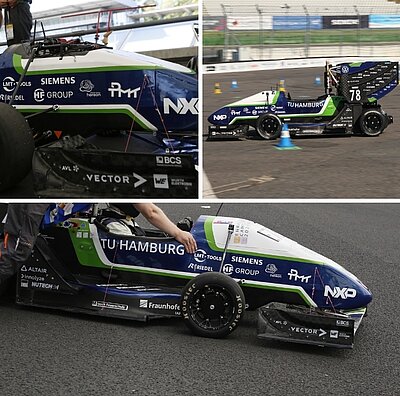
Taking BCS to the Racetrack: Projektron Supports e-gnition Hamburg
31. August 2026
Developing an electric race car, coordinating numerous team members, planning deadlines and keeping scarce resources under control: the Formula Student team e-gnition Hamburg combines technical development with demanding project management. Since autumn 2025, we at Projektron have supported the student team at Hamburg University of Technology with our project management software BCS and our project management expertise.
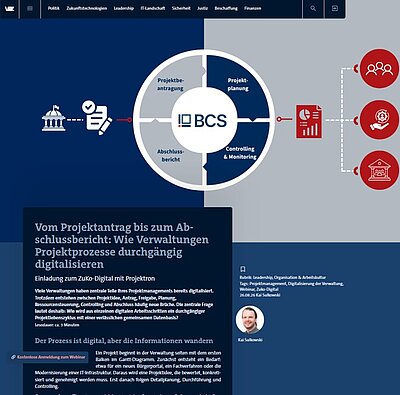
Digital Project Lifecycle in Public Administration
26. August 2026
Many administrative processes are digital today, yet media and system discontinuities still occur between the project idea, proposal, approval, planning, resource management, controlling, and project completion. In his latest article on the “Verwaltung der Zukunft” (VdZ) blog, Projektron editor Kai Sulkowski explains why only a shared data basis can turn individual digital work steps into a seamless digital project lifecycle.

Standardizing Project Management: Successfully Align Processes, Methods, and Tools
25. August 2026
When every project manager uses their own methods, templates, and status logic, organizations end up with many individual solutions but no manageable project portfolio. Learn how to standardize project management effectively, which standards and reference frameworks provide guidance, and how to establish common processes across your organization without forcing every project into the same rigid structure.