Three Companies, One BCS: Managing IT Support Across Companies
Customer Success Story: n-komm GmbH
With BCS, we have created a shared work environment in which our teams from n-komm, T.S.P., and Wilsch IT can collaborate across company boundaries. Especially when supporting IBM Power i systems, maintenance services, and customer projects, it is essential for us to have a centralized view of tickets, projects, time entries, absences, and responsibilities without requiring our employees to switch between different systems.
The n-komm Group – IT Services Backed by Long-Standing IBM Expertise
We have been operating as an IT service provider in Karlsruhe for more than 25 years. Our passion is the digital transformation of business processes, particularly for small and midsize businesses and public-sector organizations. Other key areas include cybersecurity, modern collaboration solutions, and IT infrastructure.
Our goal is not only to support our customers from a technical perspective, but also to guide them as a trusted partner throughout their digital transformation. Today, more than 280 customers and over 400 projects reflect the experience we have gained across different industries and organizational structures.
We see digital transformation as an end-to-end process. It begins with a collaborative workshop in which we analyze requirements, challenges, and opportunities for improvement. Based on these findings, we develop a tailored concept, select suitable technologies, and support implementation through integration into the existing IT environment.
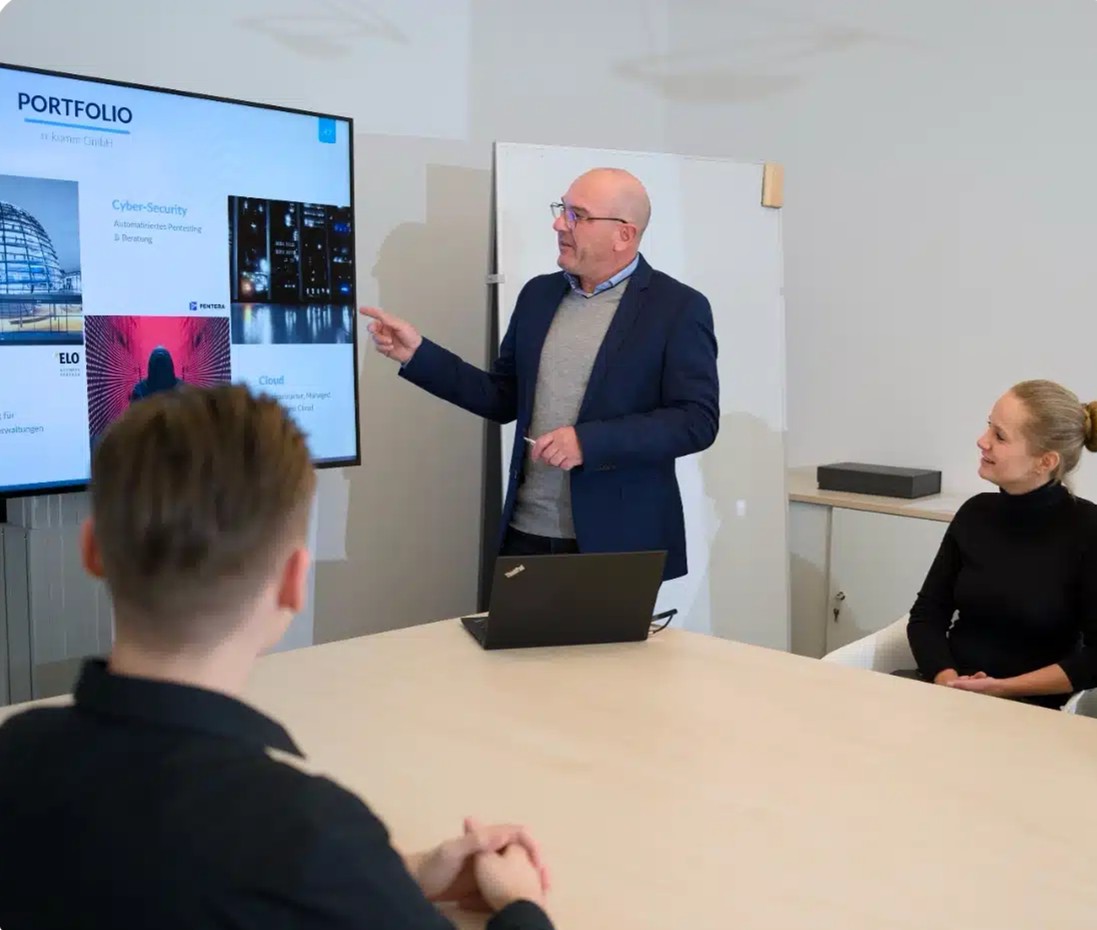
This self-image also shapes our corporate values. We see our customers as partners and work with them as equals. We focus on innovation, dedicated employees, professional consulting, and reliable implementation. Especially in business-critical IT environments, trust, commitment, and long-term support are key success factors.
On July 1, 2021, another specialist joined the group: T.S.P. Gesellschaft für Informationssysteme mbH, based in Waldbronn. T.S.P. develops and operates solutions for IBM i high availability, disaster recovery, monitoring, and warehouse management.
What unites all three companies is their commitment to the reliable operation of business-critical IT. One common denominator is IBM Power i, also known as AS/400: systems on which many customers run core business processes, ranging from ERP and warehouse and logistics operations to administrative and support workflows. This is why availability is not a secondary concern for us, but an integral part of our daily work.
BCS in Use: Project Work, Support, and Internal Organization in One System
I supported the implementation of BCS at n-komm around six years ago. We started with the goal of structuring project planning and execution more effectively while making our support processes even more centralized and transparent.
Today, we use BCS in several areas. One key focus is the planning and execution of our IT projects. We also use it for time tracking, absences, vacation requests, and sick leave, including calendar synchronization with Microsoft 365.
However, the ticketing system is the most important operational area for us. We use it both internally and externally, including customer access. This provides a major advantage for our support work: customers can submit requests in a structured way, agents can take over, forward, and document tickets, and we always retain an overview of status, responsibilities, and history.
BCS therefore supports us not only in individual processes. It has become a shared work platform for project teams, support, internal organization, and collaboration across company boundaries.
Initial Situation: Three Companies, Three Customer Databases, One Shared Support Standard
As the n-komm Group grew, we faced a typical challenge: each company brought its own history, customer structures, and systems.
We had customer data from three different sources and companies: n-komm Odoo, TSP-GIS Odoo, and a Notes application used by WITS. These data sets were imported separately into ELO and remained separated there.
This created several challenges. The same customer could appear multiple times, depending on the source system or company. A customer could therefore be listed among n-komm customers, TSP customers, and WITS customers.
For the next step toward BCS, simply transferring the data was not sufficient. We first had to determine which customer records belonged together, which were true duplicates, which needed to remain separate, and how to create a consistent, clean customer structure in ELO that BCS could subsequently use correctly.
We therefore deliberately selected only customer data from ELO for import into BCS. Suppliers were not imported. At the same time, we had to take into account that some customers were active with several companies and therefore appeared multiple times in the historical data.
Consolidating Customer Data: Email Address as the Connecting Identifier
In practice, it quickly became clear that importing customer and contact data is not merely a technical task. It also requires the right business logic.
One challenge was that customers and contacts sometimes existed more than once. When a customer had been created in the legacy systems of n-komm, T.S.P., and Wilsch IT-Services, the customer could be imported multiple times. At the same time, a user account can exist only once in BCS.
The solution was to uniquely identify customers and contacts by their email addresses. This allowed us to ensure that they were imported only once and that duplicate user accounts were not created. At the same time, we used role-based permissions to give our employees access to all relevant customer records when needed.
This was an important step toward a unified support and project environment. In support, the historical source of a record is not what matters. What matters is that the right customer, the right contact, and the right ticket are brought together.
Company-Specific Project Structures – Collaboration Across Boundaries
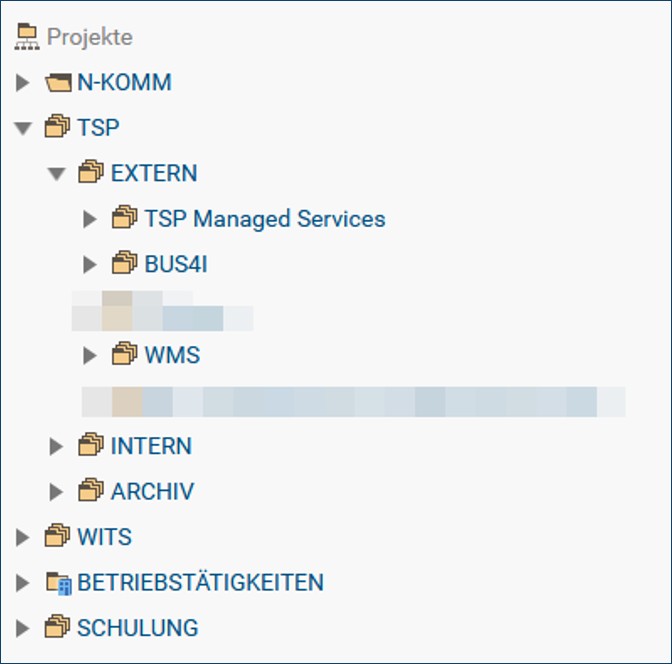
In BCS, we structured the projects separately for the three companies. In the external area, we manage customer projects and maintenance tasks. At n-komm, we essentially distinguish between projects and maintenance. At T.S.P., the structure is somewhat more complex because the company also offers its own products and services related to warehouse management, high availability, and business continuity.
The challenge is to represent this separation accurately without hindering collaboration. Especially in the IBM Power environment, employees from all three companies work together. They belong to different legal entities from an organizational perspective but collaborate on shared topics, customers, and maintenance tasks.
Our goal was therefore clear: employees should not have to switch between different environments. All relevant projects should be available centrally in one BCS environment. At the same time, not everyone should have unrestricted access to everything. Access should be granted specifically wherever it is required for their work.
BCS helped us achieve this balance between centralized collaboration and targeted permissions.
Ticketing System with Customer Access: Centralized Work, Targeted Control
The ticketing system is the most important part of our daily support work. We use it for customer requests, internal tickets, and shared maintenance tasks. It was particularly important to structure the project group hierarchy so that customer access works reliably.
Customers are assigned to the relevant projects. This allows them to view or create tickets exactly where it makes sense from a business perspective. At the same time, internal employees can collaborate across projects and companies when they work with the same customers or on the same technical topics.
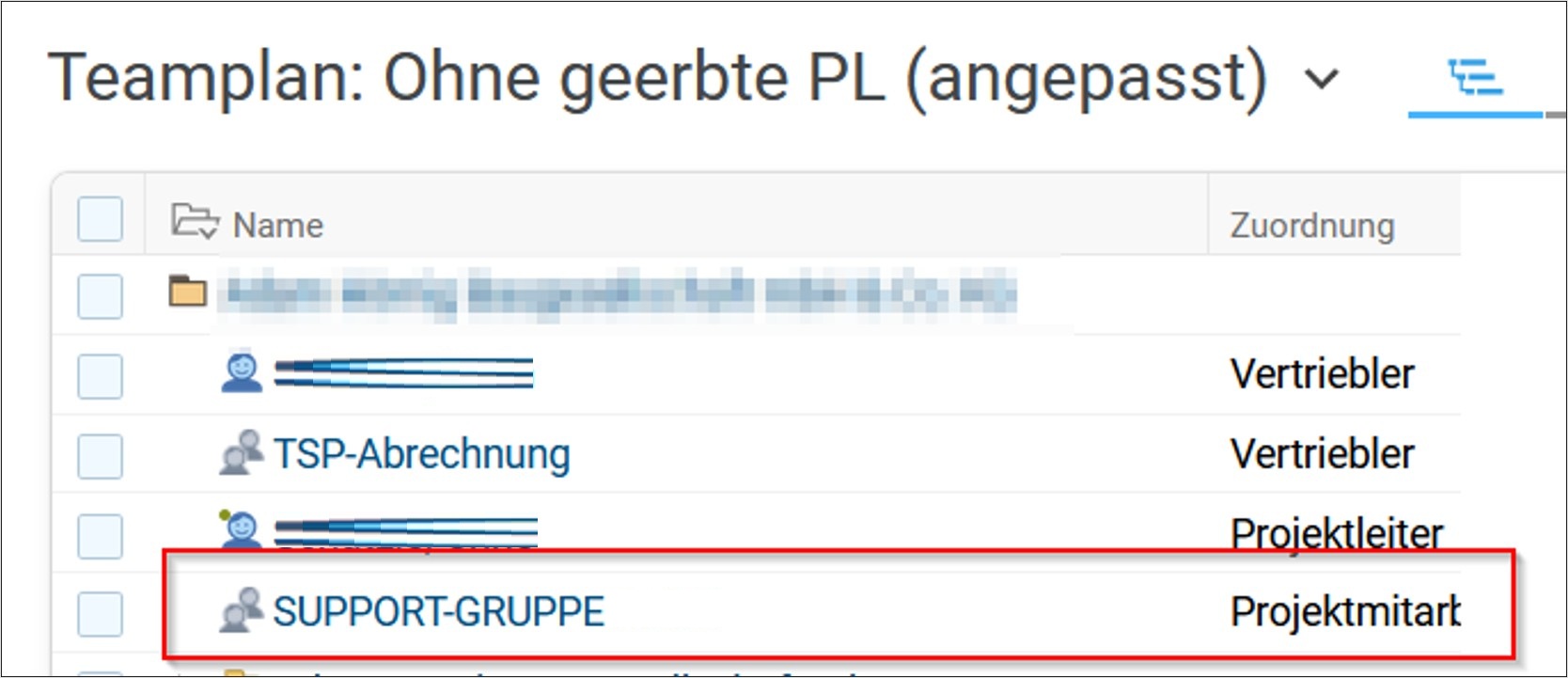
In practice, this also raised questions about permissions. Because the project structures were separated, employees could not always automatically see every project associated with a customer. In some cases, tickets were visible only through search or under “My Area” when they had been assigned directly to the employee.
The solution was to adjust team plans, groups, and assignments in a targeted manner. This allows the appropriate employees to view and process tickets without abandoning the fundamental separation of the project structures.
The Right Sender Address: Ticket Communication Aligned with Each Company
One very specific issue concerned email communication from the ticketing system. Initially, BCS sent ticket notifications primarily from the same sender address. As a result, customers sometimes replied to an address they were not familiar with.
For example, if a customer request was assigned to T.S.P. from a business perspective but the notification was sent from an n-komm address, this could lead to questions. For customers, the sender address is an important point of reference. They expect the communication to match the relevant company or project context.
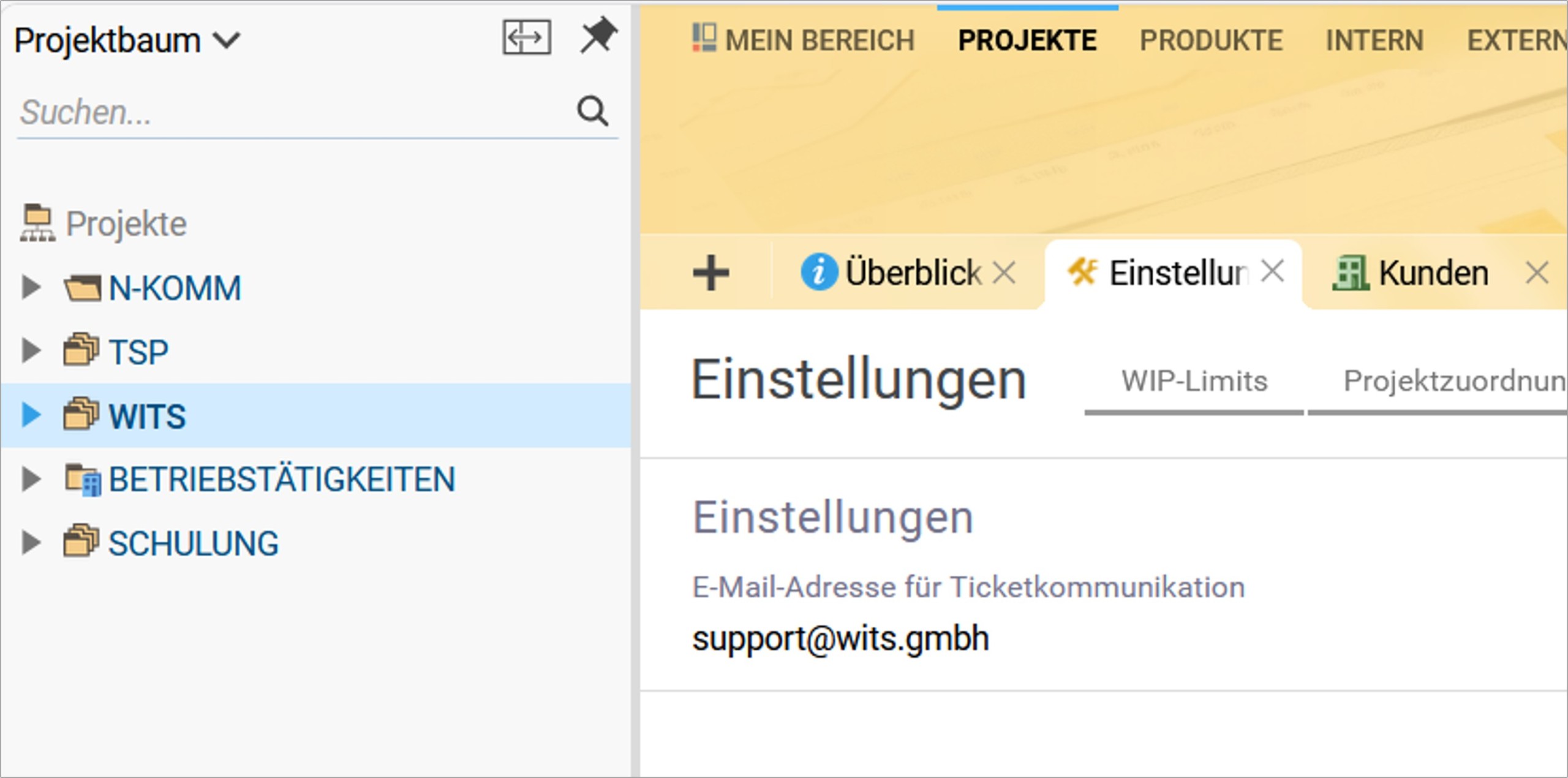
Together with Projektron, we implemented a suitable customization: the “email address for ticket communication” can be inherited from the project group by all subordinate projects. This makes it possible to control communication specifically for each project group or company.
For us, this was a good example of how BCS not only supports standard processes, but can also be flexibly adapted to real organizational structures when required.
Internal Organization: Teams, Department Heads, and Vacation Management
We deliberately keep our internal structure in BCS straightforward. We mainly represent teams as organizational units, with each team assigned a department head. Vacation management also follows this structure.
This generally works very well, but a corporate group that has grown over time inevitably presents special cases. Employees may be assigned to multiple organizations or teams. As a result, they do not automatically see one another, for example when assigning tickets. For our work, however, it is important that all relevant employees are available as contacts across company boundaries.
We addressed this by using assignments such as “department employee” and maintaining the corresponding groups and organizations. Importing groups from Active Directory is also useful because this information is then available as soon as a user is created.
Vacation approvals also showed that organizational reality and system logic do not always align perfectly. Vacation requests are approved through the “department head” assignment, which depends on the company hierarchy. In some cases, employees therefore need more than one direct department head or a department head assigned across organizational boundaries. The pragmatic solution is to communicate with one another, clarify responsibilities, and maintain the organizational logic carefully.
What We Learned: Flexibility Matters – and Projektron Supports the Implementation
The implementation and continued development of BCS within our corporate group was not purely a software project. It also involved organization, data quality, permission concepts, and the question of how to transfer historically evolved structures into a shared work environment.
Customer master data, contacts, project groups, ticket access, and sender addresses in particular demonstrated that BCS offers many options. With the right support, even more complex requirements can be implemented effectively.
From our perspective, one major advantage is that BCS enables these kinds of adaptations. The system provides a wide range of options, allowing us to use it in a way that fits our organization—with the flexibility required by a growing corporate group and centralized structures for day-to-day collaboration.
Assessment and Next Steps
Overall, we are very satisfied with BCS. Our users work with the system every day and rely on it for project work, support, time tracking, and absence management. In support in particular, BCS has become an established tool that creates transparency and noticeably improves collaboration.
Of course, the success of a ticketing system also depends on processes being followed consistently and information being documented properly. BCS provides the appropriate structure: tickets, responsibilities, history, and customer context can all be tracked centrally. This helps us in our daily work and ensures that support requests do not disappear into individual inboxes or personal filing systems.
We are especially pleased with the support provided by Projektron. Since replacing the former Notes integration and moving to Microsoft 365, the environment has been more stable and run more smoothly. Licensing and sales matters are also straightforward for us: whenever we need something, we receive fast and reliable assistance.
Looking ahead, we see several opportunities for further development. API web services are of particular interest because they could allow us to connect data more closely with Power BI and other systems. The Downloads workspace could also provide an alternative to our existing methods of making files available. BPMN workflows are another item on our list once we have the internal capacity to address these topics.
Our Conclusion
With BCS, we have created a shared platform that centrally supports our project work, time tracking, absences, and, above all, our support operations.
It was particularly important for us to represent the structures that have evolved within the n-komm Group: three companies, different customer databases, several legacy systems, and at the same time shared work on IBM Power topics, customer projects, and maintenance tasks.
Today, employees from n-komm, T.S.P., and Wilsch IT can work in a single environment. Customer projects and tickets can be tracked centrally, access can be controlled selectively, and customers receive structured access to support.
For us, BCS is therefore much more than a project planning tool. It helps us organize collaboration within a growing IT services group in a practical way—with clear structures, traceable communication, and the flexibility required for our specific needs.