Excellent tool for representation of all core processes
Success story from Best-Tech GmbH
In Projektron we see a reliable partner who provides us with a great software solution in BCS. We look forward to a long and continued successful cooperation.
Best-Tech develops solutions for electronics, automotive and mechanical engineering
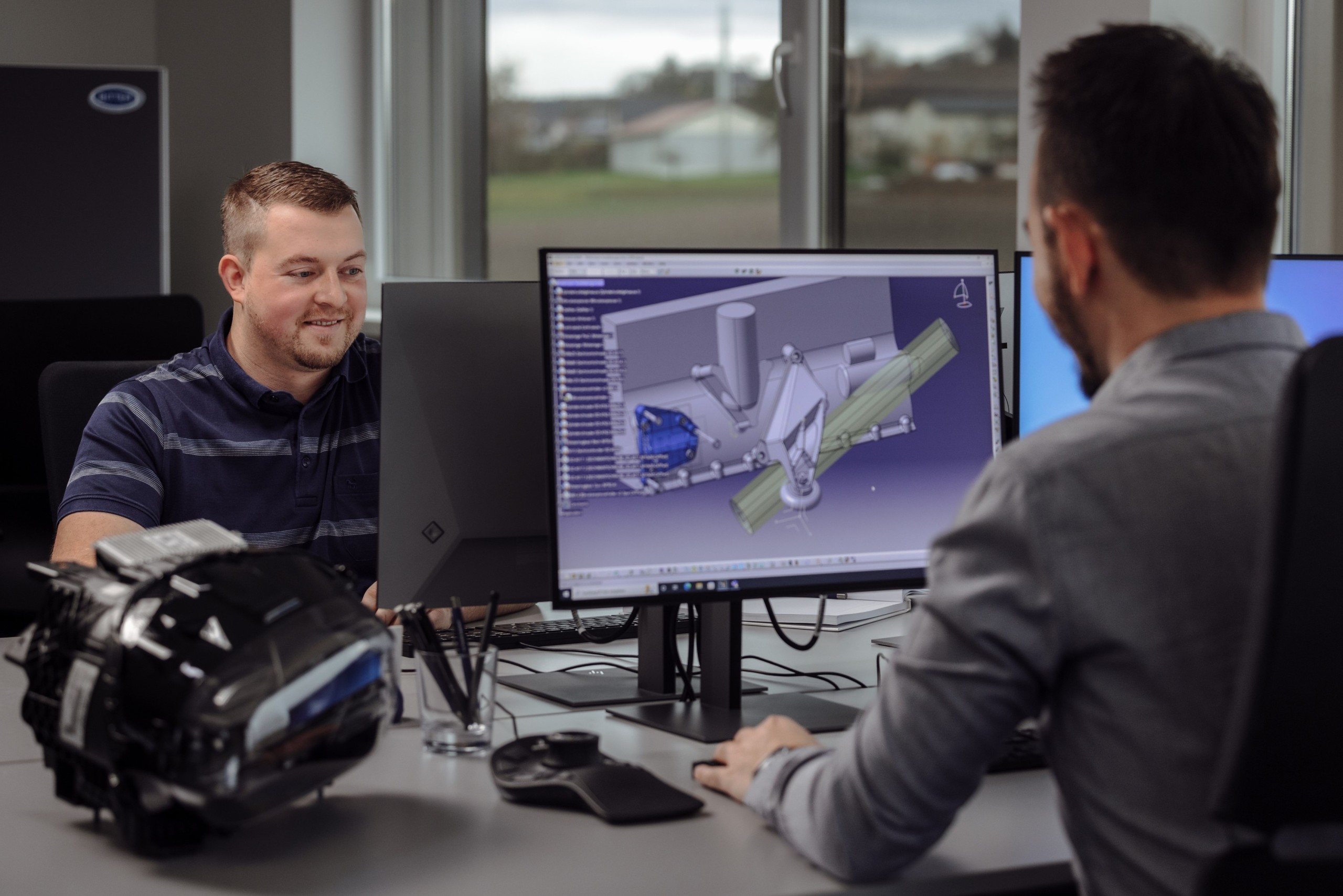
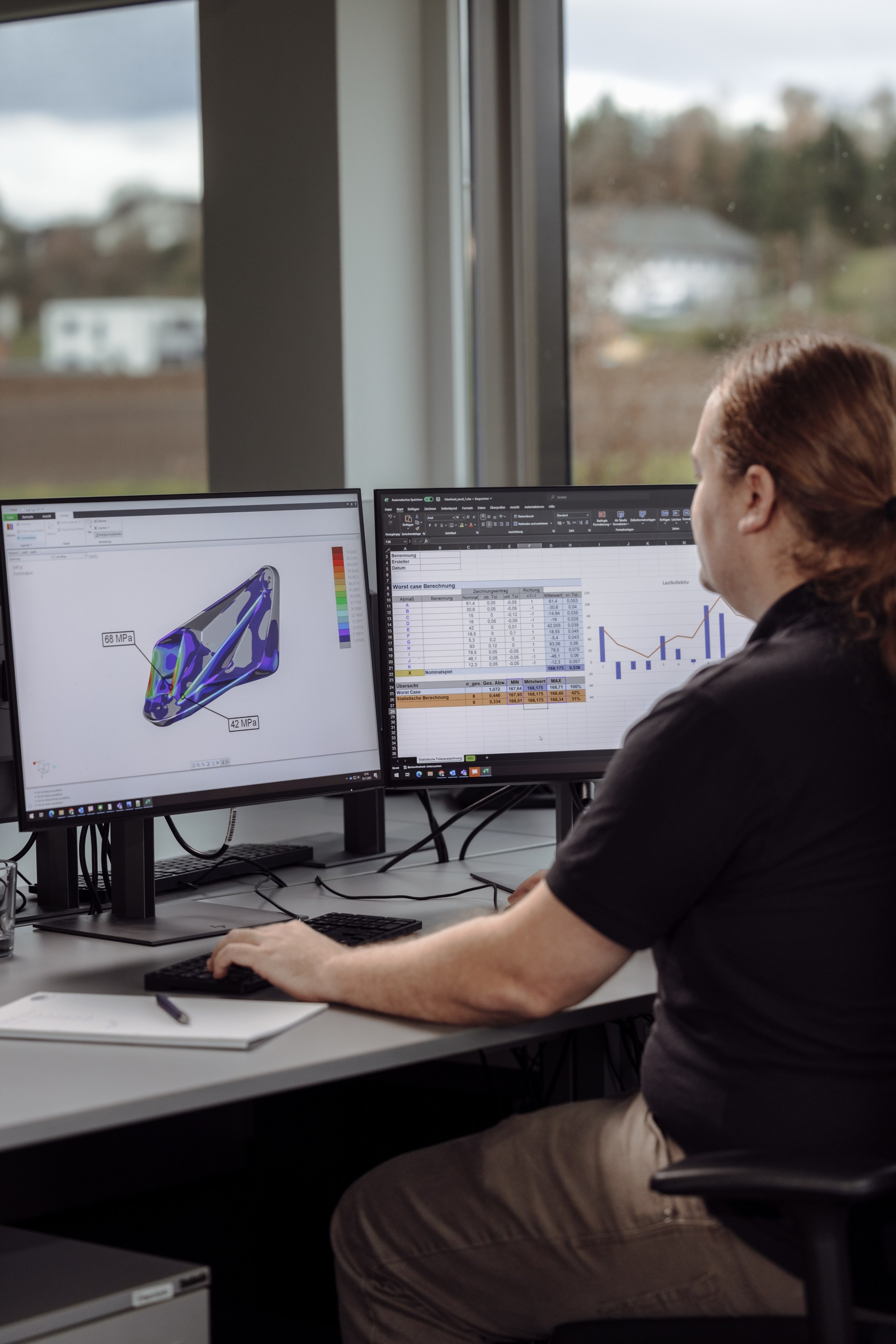
Best-Tech GmbH builds on Bitter’s more than 30 years of activity primarily in the automotive and automotive supplier industries. We see ourselves as a product developer whose main activities are design engineering and development combined with design, simulation, calculation, and 3D scanning. Our many years of experience in developing a wide range of components for machinery, engines, and vehicles enable us to cover the entire development chain for components, assemblies, or complete modules. We cover all areas of design engineering, from concept design to production readiness. We can also provide support ranging from design, simulation, and testing to prototype procurement.
Bitter GmbH started out in vehicle, special-purpose vehicle, and engine development, as well as plant and mechanical engineering. For many years, we have also supported development in the field of alternative powertrains, focusing on electric motors, battery systems, thermal management, fuel cells, and other technologies. We support our customers both in complete projects and in individual areas. Flexibility, transparency, security, and traceable project progress form the basis of our collaboration with our customers.
Project execution is carried out in a future-oriented, flexible working environment at Best-Tech in Sierning near Steyr or Munich. At the customer's request, we also work directly on site. The use of state-of-the-art tools and methods is a matter of course. We work with the three high-end CAD systems CATIA from Dassault Systems, Creo from PTC, and Siemens NX. Other state-of-the-art development tools such as ALV Fire, ePLAN, SolidWorks, and KeyShot are also used.
Our team consists of approximately 120 highly qualified and well-trained employees who are fascinated by the essence of technology. With a combination of know-how, experience, and enthusiasm, we develop innovative products and new technologies.
Projects are the core of our product development
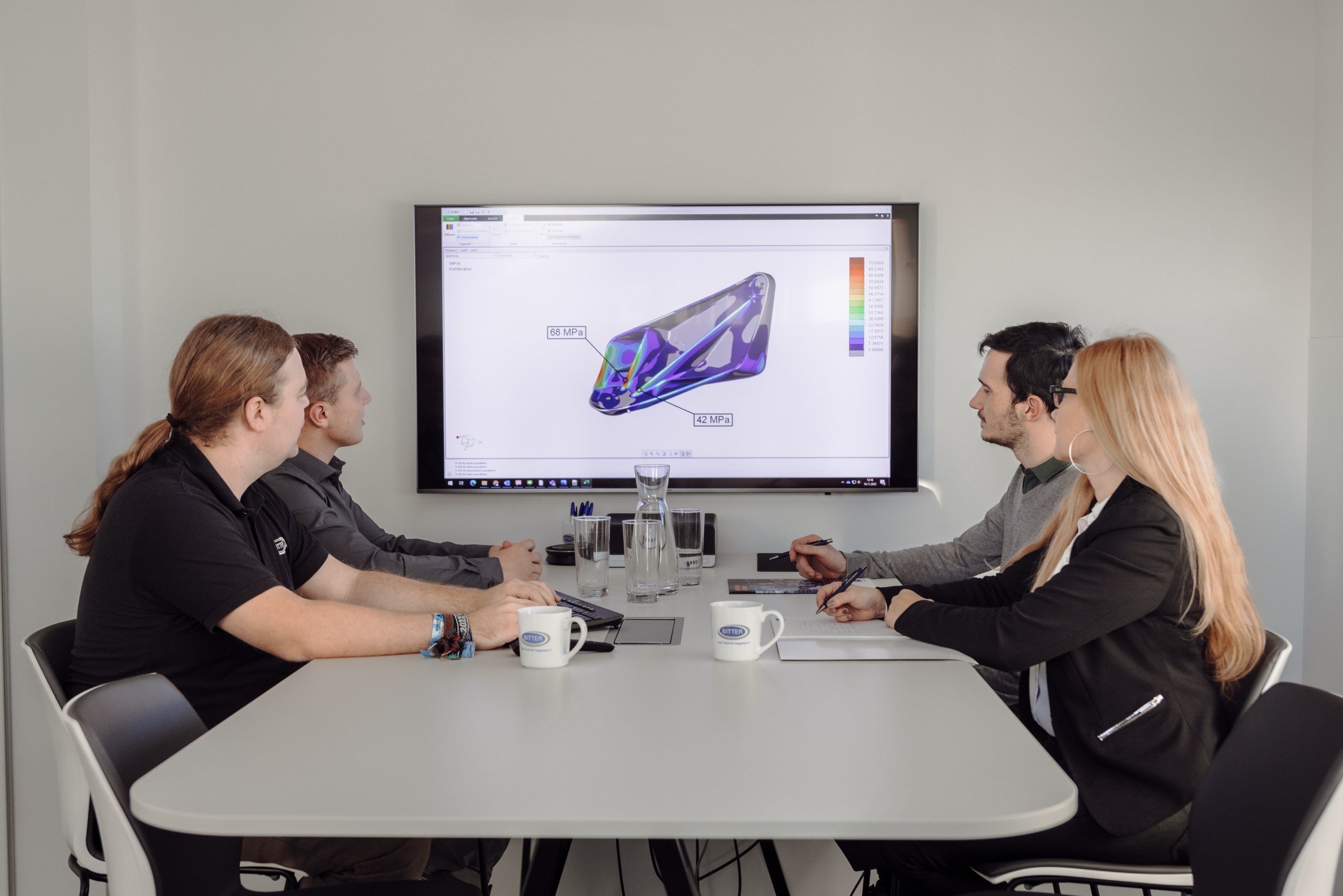
As a technical service provider, we are used to working with customers on joint projects. Such customer projects are implemented in various sizes and manifestations.
We use the Projektron BCS software throughout the entire project life cycle, starting with the pre-project phase, followed by tendering and project processing up to invoicing. In project processing, we use different tools in BCS depending on the complexity of the project. In any case, time and activity recording is a central component in every project. That's why we use BCS throughout all our projects.
The "simplest" way of working is directly at the client's site. Here, only project working hours are usually recorded in BCS during project processing.
The actual in-house projects vary from irregular small activities (e.g. via tickets) of individual employees in a framework agreement to extensive and complex development projects. Often many employees and external partners are involved.
From a defined project size onwards, effort and schedule planning as well as various options for project documentation (e.g. project manager notes, ...) are used. These serve us as a basis for quotation calculation and for ongoing project controlling.
Other project management tools available in BCS are used depending on our needs and project requirements.
BCS discovered early and implemented at the right time
We first noticed BCS in 2003 during a visit to the CEBIT trade show. At the time, we had been looking into MS Project and other single-user project management programs and happened to stop at the Projektron booth. Even then, the excellent web interface and extensive multiproject management functionality made a lasting impression on us.
Back then, Bitter GmbH was still a small company, and we could not bring ourselves to implement a system of this kind. We continued to plan our projects using MS Project and MS Excel. Time tracking and invoicing were handled in MS Access.
Over the years, Bitter GmbH continued to grow, and the existing standalone solutions were increasingly seen as an obstacle. In 2014, we therefore launched a project to select and implement an ERP system that suited our needs.

We started the selection process with the help of an external consultant. At our request, BCS, which he had not previously been familiar with, was included. It became clear that BCS, with its focus on projects, could be a better fit for us as a technical service provider than other established ERP systems, which seemed to be geared more toward manufacturing companies.
Ultimately, our initial impressions were confirmed, and we chose BCS after completing the selection process. BCS won us over with its focus on projects, the best coverage of our requirements, its good value for money, and its modern web interface.
Once we had made our decision, we planned the implementation together with Projektron. We held several joint workshops to define the configuration, specify the necessary customizations, and plan the migration of existing data. A knowledgeable and dedicated technical account manager from Projektron supported us throughout this process, helping us configure BCS to meet our requirements as effectively as possible.
We decided to import only ongoing projects and the data required for them from our existing systems into BCS. Our company structure, roles, employees, customers, contacts, cost centers, permissions, and much more were mapped in BCS, and the corresponding data was imported. Interfaces were also set up, for example, with Active Directory (user login), MS Exchange (calendar synchronization and email import), and our telephone system (CTI). Our Projektron account manager and the Projektron support team provided substantial assistance throughout this process. Even during setup and implementation, we were impressed by the adaptability of BCS.
BCS became our central management tool
Today, BCS is used across all our business processes. From intensive use in administrative areas such as human resources, through its role as the central project management tool for customer projects, to its use as the leading system for our IT infrastructure (user and permission management), BCS supports every function within the company.
As an example of how we use BCS, we would like to highlight its proposal costing capabilities. During the evaluation phase, it was already clear to us that flexibility in proposal preparation was a high priority. During the workshops, we developed a concept to make proposal costing more flexible. We commissioned Projektron to implement this customization, and it was incorporated into the standard BCS software. Today, this functionality is available as a component called “Calculation” and is occasionally expanded with additional features.
Proposal costing supports us particularly in complex and extensive development projects. We wanted to be able to distinguish technical costing from sales costing. The module gives us a transparent view of the costing process that remains easy to follow later on. We also use the aggregation options provided by the costing module. Planning and costing are often much more detailed than the actual proposal line items. This greater level of detail enables us to respond even more effectively to deviations and has led to more precise project controlling and, consequently, better project results in recent years.
In addition to proposal costing, we use almost all available BCS modules to varying degrees. The ticket system in particular has proven to be an excellent administrative tool. Almost all important core processes are handled through tickets. For example, tickets are used to process inquiries and issue invoices. In HR, all processes except payroll are mapped in BCS, from applicant management to the processing of hours and expenses. Interfaces with other systems, such as access control, Active Directory, and Azure services, particularly Microsoft 365, are implemented using the extensive data import and export capabilities. For example, exports are used to create SharePoint sites for each project with the appropriate permissions and keep them continuously updated. Over the years, we have implemented many of these interfaces ourselves, drawing on examples and customizations from Projektron and our own initiative through learning by doing.
Today, all employees use BCS to varying degrees. Its web application architecture allows our employees to access it from anywhere without needing a fat client. This is particularly helpful for our employees working on site at customer locations.
The biggest advantage of BCS for us is that we can represent almost all of the company's core processes in BCS and that the transparency and reliability of daily operations has already improved enormously in recent years. We assume that this trend will continue in the future.
Projektron - the right partner for the future
In retrospect, we can say that choosing BCS was the right decision for our company. For us as a project-oriented technical service provider, BCS is the optimal tool to successfully implement demanding design and development projects for or together with our customers. Our internal activities and processes are optimally supported and our company's further growth is facilitated.
We are very interested in the continuous further development of BCS, which optimises the already very good web interface even further and always brings forth interesting new features for our purposes.