01/16/2026 - Articles
Big Bang BCS Implementation: Why Leadership and People Were Crucial
Guest article by Katrin Saup, arsmedium – Implementing new business software such as BCS is much more than just a technical project. In this case study, Katrin Saup uses the introduction of BCS at arsmedium to show how process management, clear leadership, and the consistent involvement of employees determine success or failure. Without a test phase, but with a clear vision, arsmedium introduced BCS from Projektron in a big bang go-live with iterative organizational development. An honest report on change, responsibility, and the human side of digital transformation.
Contents
Imagine this: On December 30, you leave work for the holidays—happy New Year—and on January 2, you open your laptop only to find that all your organizational tools have disappeared. Instead, there is a completely new system with new processes: the BCS project management and ERP software from Projektron. No slow approach, no test phase – from 0 to 100 in one day. Sounds like a real challenge? That was exactly our scenario.
In this article, I provide an unvarnished insight into our experience of introducing BCS as our new enterprise software. This could also be valuable for your company.

Introducing new software involves much more than just choosing the right tool.
It is always also an organizational project that requires structured process management, clear leadership, and, above all, working with people—those who will ultimately use the software on a daily basis.
1. Why this radical shift from a multi-system landscape to BCS as the central system?
Since mid-2023, I have been responsible for leading the implementation of BCS in our company. The goal was to replace several existing tools: employee management, time tracking, project management, project controlling, and invoicing.
Not enough at once? At the same time, we also changed our accounting system.
It was a complex transition that presented not only technical but also organizational challenges.
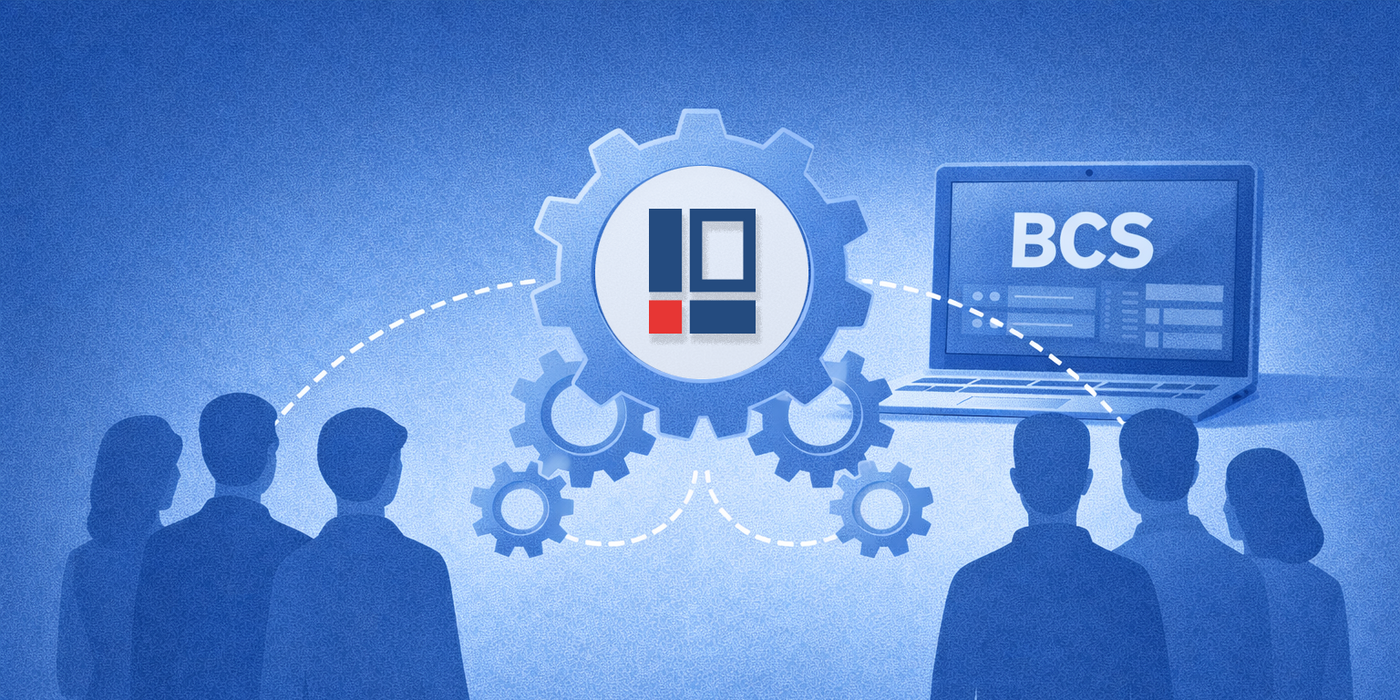
Who we are, what we do, and how we discovered BCS
We are arsmedium – an independent, owner-managed agency group with a passion for digital marketing, founded in 1996. We are based in Nuremberg and Munich. In our three specialized units – Brand, Performance, and Content – we combine strategic brand understanding, technological excellence, and creative implementation. Together, we develop brands, design digital experiences, and ensure that content has an impact. From analysis and strategy to design, production, and continuous optimization, we think holistically, work collaboratively, and thus create measurable success for our clients. We combine expertise with a genuine team culture – and that's what sets us apart.
In our search for a powerful yet flexible project management tool, it quickly became clear to us that we needed a solution that fit our way of working—integrative, efficient, and with a clear focus on transparency. The decisive impetus ultimately came from the recommendation of one of our partners, who had already been working successfully with BCS for some time.
What particularly convinced us was that BCS combines exactly what we need every day in one central location. Instead of jumping between different applications, we now get a comprehensive overview of ongoing projects, capacities, and budgets with just a few clicks. This saves time, ensures clarity, and strengthens collaboration between our units.
Equally important to us were the simple, intuitively created evaluations, which help us make data-driven decisions and manage our projects even more effectively. The option of intercompany billing was also a key factor, as it greatly simplifies our processes between locations and units.

In short
BCS from Projektron supports us exactly where it matters: in our daily operational work, in planning, and in strategic development. This decision was not only based on recommendations, but has also proven to be a real added value in our everyday work.
The challenge: Starting from scratch
The fact that so many tools were replaced by BCS at the same time was both a challenge and an opportunity: on the one hand, we were able to rethink existing processes, but on the other hand, we had to set them up completely from scratch.
All of them.
This meant:
Intensive coordination with various departments and individuals
Definition of role and rights concepts
Recording as many special cases as possible
Structuring data and processes
Preparing and conducting training and documentation – while we ourselves were still in the learning phase and processes were being established.
And all this in just six months! During which time, of course, you can't just switch off your day-to-day project business.
The value of process management: Why it's not just about BCS
How did we approach the topic? We formed a small core team with employees from the departments that will be using BCS intensively as a new tool and will form an interface to it: account management, finance, human resources, and IT.
1. Testing with real data
The first step was to initially set up the system. This involved defining the data structures and data maintenance. Since we wanted to map the internal organization, all projects, and external structures in BCS, we first had to collect all requirements, find a common denominator, and test them.
In doing so, we quickly learned that testing works much better in a running system with real data. Why? Because you immediately have content, many links already exist, and the effects of an adjustment become visible more quickly. In reality, such structures often contain more complex and specialized cases than can be devised for test scenarios – especially under very limited time constraints. This made testing directly in the test system with real data particularly valuable.
2. Formulating processes
With our comprehensive knowledge of clients, projects, and their structures, we modeled a process that worked for most projects. At the same time, these structures had to be flexible enough for special cases. We analyzed these together with all account managers: Can the special case be transferred to the standard process? Or is a different solution needed? It was essential to formulate the processes clearly and comprehensively so that all colleagues had guidelines at their fingertips at all times.
The entire account management team then had to be brought on board for complete data maintenance in the project area. One challenge was that the first training session was purely system training—our processes had not yet been finalized at that point.
This meant that many questions, such as “And how exactly do we have to set this up for ourselves in the end?”, could not yet be answered, and the focus had to be kept on the operation and technical possibilities of BCS. After all, it was not clear in the end whether all functions would actually be needed or which ones would be most useful in our workflows.
Change as an opportunity for new synergies
Despite the challenges, this change presented a huge opportunity: by replacing many individual tools with BCS, we were able to standardize workflows between client teams. This enables flexible support within the team—designers or account managers can step in more quickly when bottlenecks arise. This creates synergies and removes time-consuming hurdles to spontaneous team support.
The role of leadership in a highly dynamic environment
How do you motivate a team for a mammoth project like the introduction of comprehensive enterprise software? The honest answer: it wouldn't have been possible without the right people and their intrinsic motivation. Because, let's be honest: who would voluntarily swap their familiar system for something completely new – in the middle of the summer, fall, and Christmas holidays?
Yes, there was overtime. Yes, it was challenging. But everyone in the core team knew that BCS would make our everyday lives easier. This shared vision kept motivation high.
And the fact that there was no turning back anyway.
What helped?
Mutual support. Processes often depended on data maintenance – to share the load, we supported each other. Spending Friday afternoons together doing data maintenance feels better than doing it alone.
Internal meetings on site were essential: to be able to vent. To then continue together.
And of course – chocolate. Lots of chocolate.
Over time, our own team dynamic developed: close communication meant that everyone was always up to date. And more importantly, we knew how the others were doing. Sometimes you have to accept that nothing is working today. Then a break, a short walk, or simply a good rant about the pitfalls of the new system helps. After that, things usually got better.
Leadership in a highly dynamic environment is more...
… than just making strategic decisions. It also means being there when the going gets tough, reading between the lines, and keeping the team together—whether with motivational words or an extra-large pack of snacks.
The human side: resistance or acceptance?
During the BCS rollout, we had to consider the human aspect not only within our team.
Change always means friction. Who likes being suddenly confronted with completely new processes? Especially when there was no test phase. The challenge was not only the technical implementation, but also the question: How do we teach everyone in such a way that they accept BCS—and ideally even like it?
It won't work without people
Introductory training, open communication formats, and continuous support were essential. But the key insight is this: no matter how good a system is, if people are not on board, any change will fail.
Transparency versus skepticism: the basis for acceptance
There were many questions about BCS, as well as skepticism. Our colleagues didn't know what to expect—they couldn't imagine what the new BCS system would look like or how it would work. Especially at the beginning, we heard comments such as, “Why do we have to change anything? The old system worked fine,” or “It's taking me forever to figure this out.”
That's why we tried to keep all our colleagues regularly updated on the current status of the BCS implementation right from the start of the project. It was clear that the actual introductory training courses could only take place shortly before the turn of the year. On the one hand, because the processes had not yet been finalized, and on the other hand, because the time between the training and the switch to the tool would then not be so long that everyone would have forgotten everything again.
The regular updates gave everyone time to come to terms with this change – and to get used to the new look, where possible.
This was the biggest shortcoming: from our in-house development and perfectly implemented corporate design to a software product that, at this stage, did not yet offer any customization in terms of appearance. Let's be honest: that was never the point of choosing the system; it was all about the functions. But try telling that to your design colleagues, who only use a fraction of the tool's functions...
After the introductory training sessions, there were also two daily Q&A sessions in the first two weeks after the software was introduced. This allowed everyone to attend at least one of the sessions and clarify any current challenges with the new system.
Why two sessions every day? In order for account management and controlling to keep track of the figures for ongoing projects, all project services had to continue to be recorded on a daily basis.
In addition to all the training and instructions, it was of course extremely important to continually gather feedback from all sides during the ongoing process.
Only together: activating additional BCS functions and defining processes
This applied to both the functions and processes that had already been implemented and the new ones that were still being set up. Even after the introduction, we continued to work on setting up the remaining functions in the system and defining the final workflows. Coordination with the teams was really important here. Modeled processes always had to be coordinated with the entire team or at least presented to those who would ultimately be working with them. This was the only way we could catch any possible objections or errors that we might have overlooked before the process went live.
By the time we had set up the remaining essential functions and processes, the first year with Projektron and BCS had already passed. It was a year full of new structures, processes, and workflows. Full of modeling, testing, and optimization.
Acceptance survey: BCS put to the test
It was the perfect time to re-examine all the functions—it was time for a big survey of the entire team to put the system through its paces.
How does BCS really work in everyday use?
What is used and how?
Have all the “teething problems” been ironed out?
And what is the team still missing?
Because our theoretical considerations and their use and implementation in practice must be constantly reviewed. Can all colleagues really use the software in the most practical way possible for themselves? It's about showing them that it's important to us that they can work with BCS, because that's exactly what it's supposed to do in the end: make work and collaboration easier for ALL of us.
The interplay of process management, leadership, and people in a high-performance organization
The organizational project to introduce BCS as enterprise software has impressively demonstrated that process management alone is not enough. Without clear leadership and an understanding of the human component, the introduction of BCS would not have been successful.
High performance can only be achieved when processes are designed efficiently, leadership is clearly aligned, and people are placed at the center. Sustainable change requires not only technology, but above all acceptance and a lived corporate culture.
In a nutshell
When implementing technical changes, it is crucial not to lose sight of the people in the company. Many managers only appreciate this advice once the introduction is already underway – which makes it all the more valuable when providers such as Projektron address the issue at an early stage. Decisive moments of success often arise when it comes to getting teams on board early on and designing changes in such a way that they are perceived as a relief rather than an additional burden.
Takeaways from the “BCS Implementation” organizational project: High performance requires process management, leadership, and people
What did I learn from the BCS implementation project?
- Processes are the backbone of an organization—but they must be flexible and adaptable.
- Leadership is crucial for change—without clear communication and a vision, acceptance will be difficult.
- People are at the center – every transformation stands or falls with the willingness of the employees. Processes and changes must always be aligned with the needs and acceptance of the employees.
- (I can eat an extreme amount of chocolate)
Successful process management is not an isolated discipline. It only works in conjunction with good leadership and an engaged workforce.

About the author
Katrin Saup is Account Director at arsmedium and specializes in project management and process optimization. She combines structure with passion and helps companies turn ideas into projects that really make a difference. Her focus is on clear leadership, empathetic collaboration, and developing strategies that enable teams to grow. With her experience in managing complex projects and optimizing processes, she helps organizations become more efficient and future-proof.
More interesting articles on the Projektron blog

Project communication
One of the main reasons for project failure is a lack of project communication - according to a PMI study, communication management in a project is just as important as an accurate cost estimate, a clear definition of project goals and a thorough risk analysis. 3 practical tips for your project communication!

Leadership in change processes
Crises not only change structures, but above all people's behavior. Traditional leadership tools often reach their limits in change processes. This article shows how you can consciously shape your own impact in line with modern leadership principles.

Project Organization
Line, staff, projectized or matrix organization: the right project organization is crucial for structured processes, clear responsibilities, efficient collaboration and project success.
Choosing PM software
If your SME or company is about to choose project management software, you probably don't know where to start looking for the right PM tool for you. This guide will guide you through the PM software market and lead you to the right decision in 9 steps.
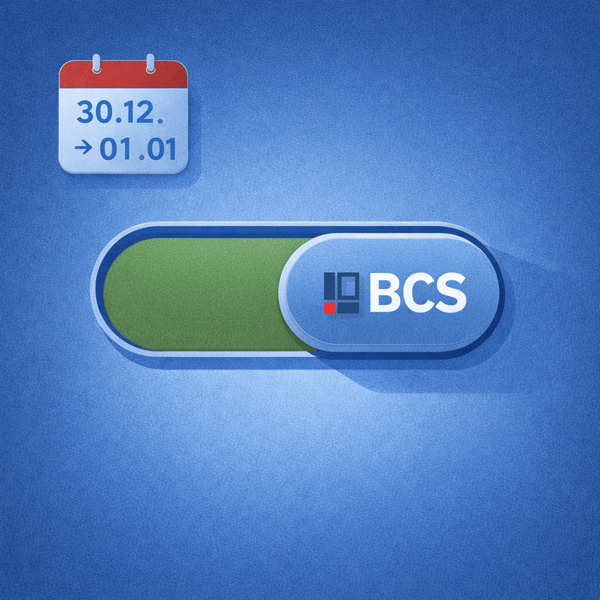
A symbolic switch set to “On” and a calendar at the turn of the year represent the big bang go-live of BCS at arsmedium – a new central system from one day to the next.