Blog
News from Projektron
In our blog, you can regularly read new technical articles and find out what's new and exciting in the world of project management.

Use cases for the AI assistant in BCS: From help to automation
09. December 2025
Artificial intelligence is not only changing the way we develop software, it is also changing the way we use software. For BCS, our project management and ERP software, this means that AI should make everyday work noticeably easier, reduce routine tasks, guide users to answers more quickly, and increase internal efficiency. While many AI initiatives focus on one-off solutions or experimental prototypes, Projektron pursues a systematic, long-term approach.

AI assistance in BCS: Step by step to precise answer quality
08. December 2025
With BCS AI assistance, we at Projektron have developed our first productive AI application that enables users to quickly and reliably obtain answers to questions about BCS documentation. The path to this point was iterative: Several rounds of testing and improvement showed that it is not the language model itself, but rather retrieval, splitting, and data preparation that determine the quality of the answers. This article shows how we at Projektron optimized the system step by step – right up to its productive use by customers.

An AI framework for BCS: Requirements and architecture
04. December 2025
Over the past few months, Projektron has been working intensively on developing a powerful and future-proof AI framework for BCS. After presenting our initial experiments with language models, RAG concepts, and prompt engineering in previous articles, we are now focusing on how these findings can be used to create a robust, productive system architecture.

An overview of the basics and development approaches of AI
03. December 2025
Since the end of 2023, we at Projektron GmbH have been exploring the possibilities of AI—how can we make this technology usable for our ERP and project management software BCS? In a development project, we familiarized ourselves with the technology and worked out some basics for possible product applications.

Making Competence Visible: Why Certifications in Projects Are More Than Just a Piece of Paper
24. November 2025
Guest article by Franziska Hinze, IAPM – In project management, there is a wide range of certifications available. They serve as visible proof of solid competencies and confirm a deep understanding of the discipline. At the same time, they act as catalysts for both personal and organizational development by demonstrating mastery of established methods and practices. This, in turn, can significantly enhance career opportunities. The following article explores the benefits and limitations that certifications can bring to both learning and professional practice.
Project management with PMI and PMBOK Guide – a proven standard in transition
20. November 2025
The PMI's PMBOK Guide is considered one of the most important standards in project management and has undergone fundamental development with its seventh and now eighth editions. While earlier versions took a process-oriented approach, PMI now focuses more on flexible principles and results-oriented performance domains. This change enables companies to apply the PMBOK Guide not only to traditional projects, but also to agile and hybrid projects. But how can the PMBOK Guide be optimally implemented in practice? This article provides an in-depth look at the twelve principles, eight performance domains, and key certifications. We also show you how to work in accordance with the PMBOK Guide using Projektron BCS – from planning and risk assessment to reporting.
RAG (Retrieval-Augmented Generation): How AI applications benefit from it
19. November 2025
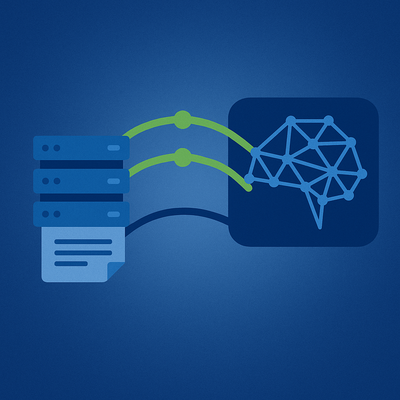
Language models such as GPT, BERT, and LLaMA have impressive language comprehension skills. They can summarize, formulate, or translate texts—and even show a touch of style awareness. But one crucial disadvantage remains: the knowledge of these models ends at the point of training. So they still know who discovered America, but not who just won the soccer championship or what new AI developments are currently making the rounds. Company-specific information is also left out. For example, a standard model cannot answer questions about the latest BCS releases. This is where RAG (Retrieval-Augmented Generation) comes into play. RAG gives the language model access to current or subject-specific information. This means that AI can not only draw on its pre-trained knowledge, but also on current data that is specifically relevant to the task at hand.