Blog
News from Projektron
In our blog, you can regularly read new technical articles and find out what's new and exciting in the world of project management.

An overview of the basics and development approaches of AI
03. December 2025
Since the end of 2023, we at Projektron GmbH have been exploring the possibilities of AI—how can we make this technology usable for our ERP and project management software BCS? In a development project, we familiarized ourselves with the technology and worked out some basics for possible product applications.

Making Competence Visible: Why Certifications in Projects Are More Than Just a Piece of Paper
24. November 2025
Guest article by Franziska Hinze, IAPM – In project management, there is a wide range of certifications available. They serve as visible proof of solid competencies and confirm a deep understanding of the discipline. At the same time, they act as catalysts for both personal and organizational development by demonstrating mastery of established methods and practices. This, in turn, can significantly enhance career opportunities. The following article explores the benefits and limitations that certifications can bring to both learning and professional practice.
Project management with PMI and PMBOK Guide – a proven standard in transition
20. November 2025
The Project Management Institute (PMI) PMBOK® Guide is one of the world's most widely recognized reference works in project management. The latest editions of the guide represent a fundamental evolution: away from a purely process-oriented set of rules and toward a principles-, values-, and context-oriented framework. The current edition builds on this change and combines fundamental guiding principles, key performance areas, and modern, non-prescriptive process guidance. As a result, the PMBOK® Guide is now equally suitable for classic, agile, and hybrid project environments. The focus is less on the question of exactly which steps to take and more on how project managers can make situation-appropriate decisions and create sustainable value. But how can the PMBOK Guide be optimally implemented in practice?
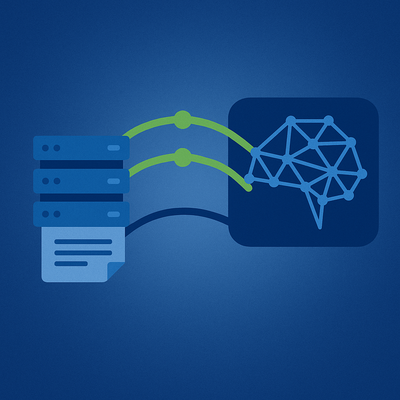
RAG (Retrieval-Augmented Generation): How AI applications benefit from it
19. November 2025
Language models such as GPT, BERT, and LLaMA have impressive language comprehension skills. They can summarize, formulate, or translate texts—and even show a touch of style awareness. But one crucial disadvantage remains: the knowledge of these models ends at the point of training. So they still know who discovered America, but not who just won the soccer championship or what new AI developments are currently making the rounds. Company-specific information is also left out. For example, a standard model cannot answer questions about the latest BCS releases. This is where RAG (Retrieval-Augmented Generation) comes into play. RAG gives the language model access to current or subject-specific information. This means that AI can not only draw on its pre-trained knowledge, but also on current data that is specifically relevant to the task at hand.

Attention in AI: How machines understand context
18. November 2025
In today's world of artificial intelligence (AI), transformer models such as BERT, GPT, and LaMDA are ubiquitous. These models are revolutionizing natural language processing (NLP) and enabling applications ranging from machine translation to chatbots. But what exactly makes these models so powerful? The key lies in the so-called attention mechanism: it evaluates which words in the text are particularly important for a specific word and thus generates context-dependent embeddings. In this article, you will learn how the attention mechanism works mathematically, why it makes the difference compared to older methods such as LSTM, and where it is used in AI systems today.
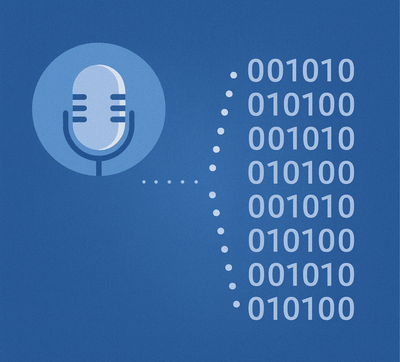
Vectorization in AI — How words become numbers
06. November 2025
What happens when artificial intelligence turns words into numbers? Behind modern language models lies an inconspicuous but central principle: vectorization. It translates language, images, and sounds into mathematical structures, making understanding, searching, and generation possible in the first place. In this article, you will learn what exactly vectorization in AI means, how embeddings are created, why AI systems need numerical representations instead of words, and how these vectors are used today in search engines, RAG systems, and recommendation systems. Using a vivid example from the Middle Ages, I will show step by step how semantic relationships are converted into mathematical objects, from one-hot encoding to Word2Vec to contextual embeddings in modern transformer models.

Leadership in change processes – how behavior in companies is changing and what managers need to know
17. October 2025
In a world where crises, upheavals, and uncertainty have become the new normal, traditional leadership tools are no longer sufficient. Routines are breaking down, conflicts are increasing—and suddenly it is no longer the best process that determines success or failure, but people's behavior. This article shows why managers today need to lead differently, what role adaptability and resilience play in this, and how models such as DiSC® can provide guidance without becoming pigeonholed.