04/15/2026 - Articles
IAPM certification: flexible, practical, international – is it worth it?
Is IAPM certification really worth it – or are PMI, PRINCE2 or IPMA the better choice? Anyone looking to gain certification in project management soon finds themselves faced with precisely this question. But what exactly is the IAPM? The International Association of Project Managers (IAPM) takes a deliberately practical and method-neutral approach. But how does this approach compare to established certifications, and for whom is IAPM particularly worthwhile?
The IAPM certification stands out primarily due to three key features: it is method-agnostic, can be completed entirely online, and is valid for life. This is precisely why the IAPM certification is of interest to professionals and managers who wish to demonstrate their project management skills without having to commit to a rigid methodology.
Instead of a narrow focus on specific frameworks, the IAPM emphasizes a broad knowledge base for traditional, agile, and international project management. This makes the certification particularly appealing to organizations where different approaches are pragmatically combined. This classification stems directly from the certification foundations and certification levels provided by the IAPM.
Contents
What is the IAPM?
The International Association of Project Managers describes itself as an international association and certification body for project managers based in Liechtenstein. The IAPM’s goal is to promote knowledge and quality in project management. It also highlights its ISO 9001-compliant quality management system and notes that its standards and methods have been recognized by the Procurement Office of the German Federal Ministry of the Interior since 2018.
The IAPM was founded in 1997 and positions itself as a global association and certification provider. Its focus is on promoting project management knowledge, supporting project managers in practice, and developing standards and guidelines. Unlike providers with a strong focus on a specific framework, the IAPM adopts a broader competency-based approach.
Particularly noteworthy is the structure of the certification foundations. For traditional project management, IAPM certification is based on the Project Managers’ Guide (IAPM). For the agile domain, the Agile Project Managers’ Guide (IAPM) serves as the foundation. According to the IAPM, both guides define the topics relevant to the respective certification exam. This results not in a rigid methodological model, but in a broad competency framework that can be applied to various project environments.
Why is IAPM certification worth considering?
A key advantage of IAPM certification is the absence of mandatory recertification. This clearly sets IAPM apart from certifications that require holders to resubmit documentation or earn continuing education credits at regular intervals.
Added to this is the flexible online nature. The IAPM describes its exams as a reputable online testing process. According to the FAQ, all that is needed for a smooth process is a current browser, a stable internet connection, and JavaScript and cookies enabled. This significantly reduces the organizational burden—especially for working professionals who wish to pursue certification alongside their daily work.
Another advantage lies in accessibility. The IAPM emphasizes that many of its certifications are accessible without formal proof of experience and that fees are based on the gross domestic product of the candidate’s country of origin. Additionally, the organization offers a 20 percent discount for school students, university students, and active employees of aid organizations.
How widespread and recognized is IAPM certification?
The IAPM itself refers to its international reach and backs this up with specific figures on its website. For December 2025, it reports 8,262 passed exams, 1,546 failed exams, a pass rate of 84 percent, and networks in 172 countries. Among the top 10 countries for certificate holders, the IAPM lists Germany, India, Austria, Switzerland, Nigeria, the Philippines, and the U.S., among others.
In terms of classification, this means: The IAPM is neither a purely local provider nor a niche certification without international reach. At the same time, it positions itself differently from certifications that are primarily perceived through a globally dominant framework or a highly formalized recertification model. This is precisely what makes it unique: It is particularly strong where flexibility, methodological diversity, and practical applicability are required.

When the IAPM is particularly well-suited
if you are looking for a method-agnostic project management certification
if you do not want to artificially separate traditional, agile, and hybrid projects
if you prefer an online certification that requires a manageable amount of effort
if you want a certificate valid for life without the need for recurring recertification
Who might be interested in IAPM certification?
The IAPM certification is particularly appealing to newcomers and project team members looking to advance their careers. For the Certified Project Manager (IAPM) and the Certified Agile Project Manager (IAPM), the IAPM explicitly states that prior experience is not required but advantageous. This keeps the barrier to entry relatively low.
It is equally appealing to project managers in medium-sized companies, consulting firms, and organizations with hybrid project environments. The reason: The IAPM does not test a single rigid methodology, but rather broader competencies related to project work, leadership, and team dynamics, as well as knowledge of Scrum, Kanban, and Extreme Programming in the Agile track.
The IAPM also offers a suitable career path for professionals with an international focus. However, the Certified International Project Manager (IAPM) requires an existing IAPM certificate. According to the IAPM, the exam covers topics such as projects in a globalized world, communication culture in international projects, and cultural dimensions.
Overview of IAPM Certificates
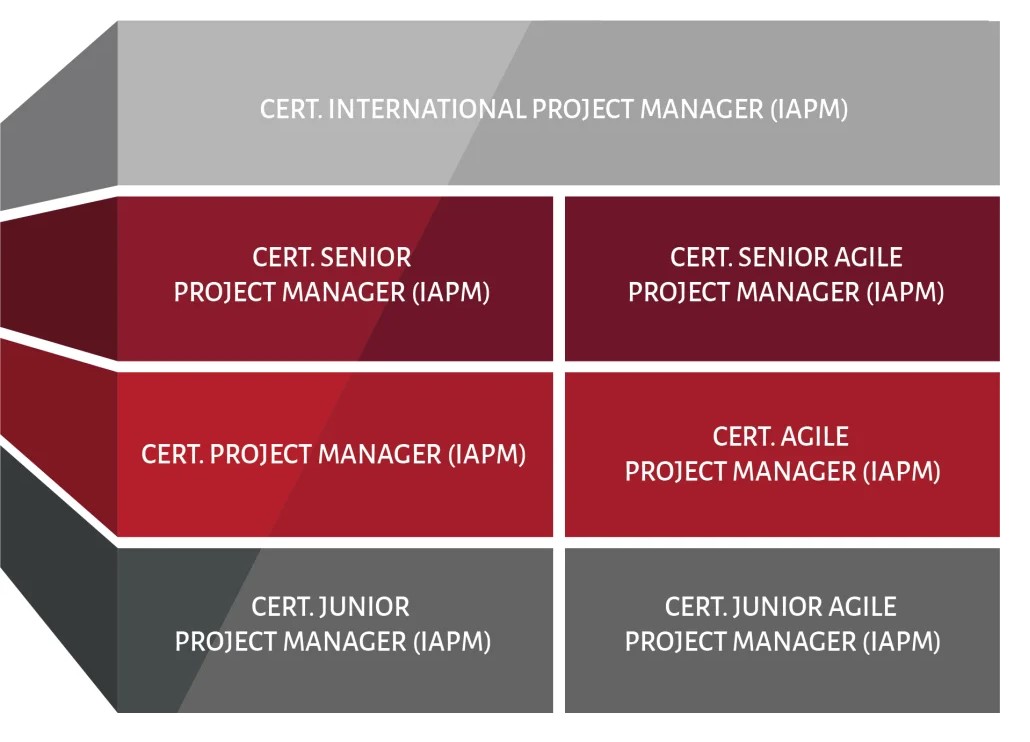
The IAPM offers several certification levels for traditional, agile, and international project management.
| Certification | Classification | Suitability & Requirements |
| Certified Junior Project Manager (IAPM) | Entry-level certification in traditional project management. This certificate is aimed at beginners, students, and individuals who want to demonstrate basic knowledge of classical project management. | Suitable as a low-threshold entry point. No prior practical experience is required for this certification. |
| Certified Project Manager (IAPM) | Core certification for traditional project management. It certifies theoretical knowledge required to plan and execute projects. | Suitable for project team members and professionals who want to demonstrate solid project management fundamentals. Professional experience is not required but beneficial. |
| Certified Senior Project Manager (IAPM) | Advanced certification level for traditional project management with proven practical experience and leadership responsibility. | Requires at least five years of project management experience, including three years in a leadership or high-responsibility role. |
| Certified Junior Agile Project Manager (IAPM) | Entry-level certification in agile project management. This certificate is aimed at beginners, students, and individuals who want to demonstrate initial knowledge of agile working methods. | Especially suitable for getting started in Scrum-oriented and agile project environments. No prerequisites are required. |
| Certified Agile Project Manager (IAPM) | Core certification for agile project management knowledge. It confirms theoretical knowledge required to organize and execute agile projects. | Suitable for project team members, Scrum-related roles, and teams working in agile environments. Practical experience is not required but beneficial. |
| Certified Senior Agile Project Manager (IAPM) | Advanced level for agile project managers with verified experience in agile project environments. | Requires at least five years of practical experience in agile project management. In terms of content, the certification uses the same question pool as the non-senior agile level, supplemented by the experience requirement. |
| Certified International Project Manager (IAPM) | Specialization for international project contexts. The focus is on international collaboration, cultural differences, and global project management competencies. | Requires an existing relevant IAPM certification, such as Certified Project Manager, Certified Senior Project Manager, Certified Agile Project Manager, or Certified Senior Agile Project Manager. |
This tiered structure is a particular advantage: it makes the IAPM suitable both for those taking their first steps in project management and for those seeking to specialize later on. At the same time, the certification process remains relatively clear and straightforward.
What does the IAPM certification cover?
The content basis for traditional certifications is the Project Managers’ Guide (IAPM). According to the IAPM, it covers all topics necessary for the theoretical execution of a project, from project initiation to project closure. It is divided into three sections:
project-related hard factors
people and leadership in projects
information regarding certification levels and the certification process
The Agile Project Managers’ Guide (IAPM) forms the basis for agile certification. In it, the IAPM explicitly mentions Scrum, Kanban, and Extreme Programming. At the same time, the IAPM discusses hard and soft factors of Scrum-oriented project management in its Agile Guide. The IAPM focuses not only on technology and processes, but also on leadership, communication, and collaboration.
What the IAPM Certification Demonstrates
Fundamentals of traditional or agile project management
Understanding of project structure, management, and closure
Knowledge of team leadership, motivation, and conflict management
In the agile track, additional knowledge of Scrum, Kanban, and XP
In the international track, knowledge of cultural and global project contexts
Costs and Application Process for IAPM Certification
On its website, the IAPM highlights a fair fee structure. Fees are based on the gross domestic product of the applicant’s country of origin. Additionally, there is a 20 percent discount for high school students, college students, and active employees of aid organizations. Specific fees vary by country and certification level.
The exam process takes place online. After registration, the IAPM verifies the information provided, issues an invoice if the requirements are met, and sends the login credentials for the test or exam after payment is received. For the Certified Project Manager (IAPM), the FAQ specifies 120 questions in 80 minutes, of which at least 65 percent must be answered correctly. According to the FAQ, the same applies to the Certified Agile Project Manager (IAPM). For the Certified International Project Manager (IAPM), there are 80 questions in 60 minutes, with a passing score of 65 percent.
In addition, the IAPM offers self-tests or pre-tests. According to the IAPM, a self-test consists of 25 questions in 20 minutes and helps identify knowledge gaps before the actual exam. This aligns well with the overall accessible positioning of the IAPM certification.
A Critical Examination of the IAPM
The IAPM certification offers a number of compelling advantages, particularly flexibility, low barriers to entry, and certificates that are valid for life. At the same time, it makes sense to view it in a nuanced way within the context of the project management market. Compared to established certifications such as the Project Management Institute (PMI), PRINCE2, or the International Project Management Association (IPMA), it is clear that the IAPM deliberately takes a different approach. This approach brings advantages, but also leads to limitations depending on the context of use.
Market Awareness
A key point of criticism is its comparatively lower level of recognition. While PMI, PRINCE2, or IPMA are well-established worldwide and are frequently explicitly mentioned in job postings or tenders, the IAPM has less widespread presence. Particularly in international corporations or highly standardized organizations, this can result in an IAPM certificate not being immediately recognized.
However, this does not mean that the IAPM is of lower quality. Rather, it is a matter of market penetration and brand awareness. The IAPM is active internationally and growing, but does not achieve the same visibility as the large, historically established certification organizations.
Perception Compared to PMI and PRINCE2
The perception of the IAPM differs significantly from traditional certifications. The Project Management Institute (PMI) stands for a highly formalized certification system with clear requirements and regular recertification. PRINCE2 is closely tied to a clearly defined methodology.
The IAPM, on the other hand, does not follow a framework-based approach but rather a broader project management-oriented approach. It does not certify specialization in a specific framework but rather a broader understanding of project management. This positioning makes sense in many practical project environments, especially where traditional, agile, and hybrid approaches are combined. At the same time, this approach can lead to the IAPM being less in demand in organizations that specifically rely on certain methods.
IAPM Compared to IPMA (and GPM)
The comparison with the International Project Management Association (IPMA) illustrates the differences particularly clearly. In the DACH region, the Society for Project Management (GPM) also plays an important role, as it acts as the German representative of IPMA and organizes its certifications in Germany.
IPMA relies on a structured four-level system (Levels D through A) and evaluates not only theoretical knowledge but, in particular, verifiable project experience. Through organizations such as the GPM, this system is well-established in German-speaking countries and is frequently taken into account in larger companies as well as in public tenders. The IAPM takes a different approach. Its basic certifications are deliberately designed to be low-threshold, require no mandatory proof of practical experience, and can be completed regardless of location. In addition, the certification is valid indefinitely.
This results in a key difference: While IPMA and GPM certifications focus heavily on proven experience and structured competency development, the IAPM focuses more on the rapid, practical demonstration of project management fundamentals. This can lead to differing perceptions. In organizations that work with IPMA or GPM standards, certification is often viewed as comprehensive proof of competence. The IAPM, on the other hand, scores points primarily for its accessibility, flexibility, and international applicability without high entry barriers.
For project managers, this means: The choice between IAPM and IPMA or GPM is less a question of “better or worse,” but rather a question of the appropriate certification model for the respective professional environment and one’s own goals.
Methodological Openness: A Double-Edged Sword
A key feature of the IAPM is the absence of a proprietary, mandatory project management method. On the one hand, this is an advantage because it allows project managers to work flexibly and combine methods as needed. This aligns well with practice, especially in hybrid project environments. On the other hand, some employers may question what specific methodological proof an IAPM certificate provides.
Since no specific method is the focus, the certification attests more to general project management competence than to the application of a clearly defined framework. Depending on the organization, this can be perceived as an advantage or a limitation.
The significance of the certificates in practice
The significance of IAPM certificates depends heavily on the context of use. A positive aspect is that they reflect a broad understanding of project management as well as cross-methodological competencies. The exams are based on clearly defined content and follow a structured digital examination process.
A limiting factor is that the basic certificates require no mandatory proof of practical experience. Furthermore, despite its advantages, the lifetime validity may be interpreted in some organizations as a lack of evidence of continuous professional development.
In practice, therefore, IAPM certification demonstrates its greatest value in combination with real-world project experience. It then serves as structured proof of competence, supplemented by practical experience.

Franziska Hinze, IAPM
Certifications should not be overrated. A certificate does not automatically make someone the best candidate. Essential social skills […] must be demonstrated in practice.
Context of the Criticism
The points mentioned above show that the IAPM is not equally suitable for every setting. In highly standardized organizations or in career paths with clearly defined certification requirements, other certifications may offer advantages.
At the same time, it becomes clear that many of the criticisms mentioned are closely linked to the strengths of the IAPM. The low barriers to entry, the methodological openness, and the absence of recertification are deliberately chosen characteristics that offer particular advantages in flexible, modern project environments. The IAPM certification is not a substitute for all other project management certifications, but rather an independent alternative with a clear profile.
For beginners, project team members, medium-sized companies, and hybrid project organizations, it offers an easily accessible yet well-founded proof of competence. In more heavily regulated or methodologically defined environments, however, it should be applied selectively.
Overall, the picture is nuanced but positive: The IAPM is not a universal standard solution, but for many use cases, it is a compelling and contemporary certification.
Comparison of IAPM, IPMA, PRINCE2, and PMI/PMP: Which Certification Is Worth It?
The question of which certification is “best” can only be meaningfully answered by considering the target audience and project environment. The IAPM is particularly appealing if you are looking for broadly applicable project management knowledge, online flexibility, and lifelong validity. IPMA positions itself as a competency-based four-level system with regular certification updates. PMI requires ongoing professional development activities in the CCR system for many of its certifications. PRINCE2 is strongly positioned as a structured best-practice methodology and is marketed through PeopleCert.
| Criterion | IAPM | IPMA | PRINCE2 | PMI / PMP |
| Core Approach | Methodology-independent certification for traditional, agile, and international project management | Competency-based 4-level system (A–D) | Structured best-practice method | Global certification system, methodology-independent |
| Certification Levels | Junior, Project, Senior, Agile, International | Level A, B, C, D | Foundation, Practitioner | PMP, CAPM, PMI-ACP, etc. |
| Validity | Valid for life | Regular recertification required | Partially requires renewal | 3-year cycles with PDUs |
| Exam Format | Online, flexible, multiple choice | Competency-based, including assessments | Standardized exams | Formalized exam process |
| Requirements | Depends on level; entry possible without experience | Experience required depending on level | Varies by level | Proof of experience and education required |
| Methodological Focus | Methodology-independent, suitable for hybrid approaches | Competency model (ICB) | Defined method (PRINCE2) | PMBOK-based, methodology-independent |
| Cost Structure | Based on GDP | Country- and level-dependent | Fixed prices per certification | Exam fees + ongoing recertification |
| Strengths | Flexible, fast, accessible | High recognition, depth | Clear structure | Global recognition |
| Target Groups | Beginners, SMEs, hybrid teams | Career-oriented project managers | Standardized organizations | International project managers |
The IAPM certification is an excellent choice, especially if you want to combine broad project management knowledge, low barriers to entry, lifetime validity, and method-agnostic practice. If, on the other hand, you are specifically targeting an environment that requires a particular methodology or a specific certification, you should review the requirements of that target market.
Employer Perception in Europe and German-Speaking Markets
From an international perspective, IAPM positions itself as a globally active certification body with European roots. Its location in Liechtenstein, its visibility in German-speaking markets, and its network of partners contribute to its credibility—especially in Central Europe. IAPM also highlights recognition of its standards and methods by a procurement authority of the German Federal Ministry of the Interior since 2018.
IAPM’s international orientation is also reflected in its organizational structure. Rather than operating as a traditional membership association, IAPM presents itself as a global network of certified project managers, partners, and active contributors. This network includes training partners, network officials, ambassadors, and other representatives across different regions.
A key role within this structure is played by the ambassadors. They serve as points of contact for companies and interested professionals, represent IAPM’s approach externally, and help connect the organization with business practice. Many of them are also experienced project managers, trainers, or consultants who increase IAPM’s visibility in their professional environments.
This network is complemented by so-called network officials, who are active in different regions worldwide, organize events, maintain contacts, and serve as local points of contact. Training partners, university collaborations, and advisory bodies also contribute to IAPM’s position as more than just a certification provider, but as a connected system for promoting project management knowledge.
Overall, this creates less of a traditional association with a rigid structure and more of a growing, internationally distributed network. This is relevant when assessing IAPM: its visibility is shaped less by formal memberships and more by active networks, partnerships, and the professional presence of its certified project managers.
What software is best for IAPM-oriented project management?
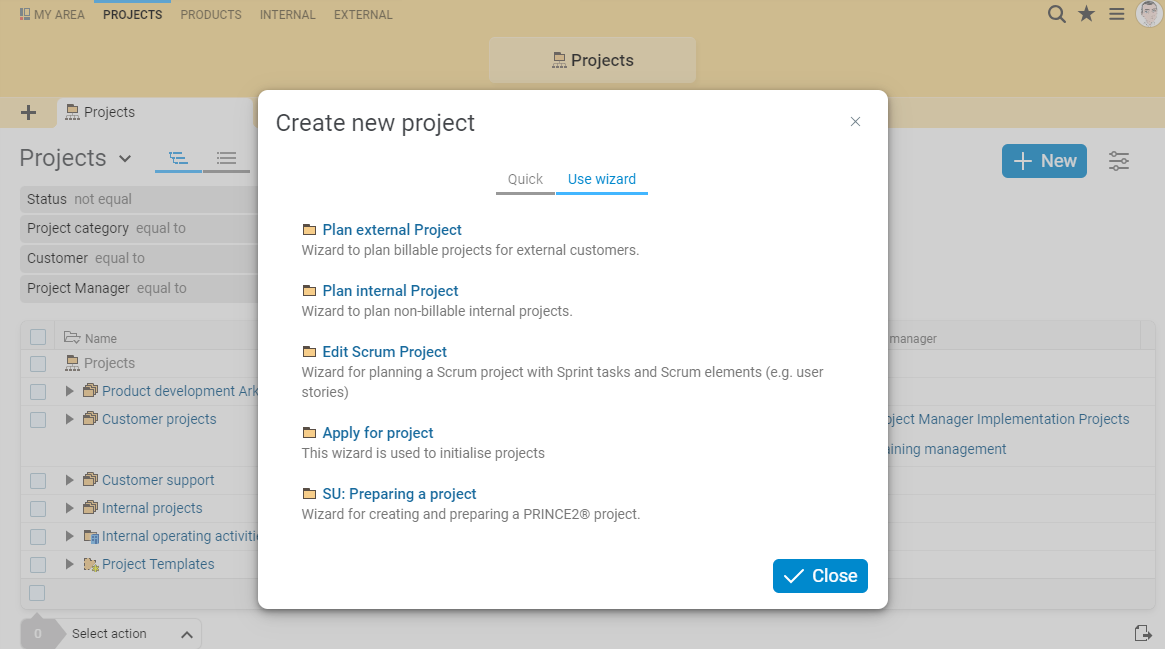
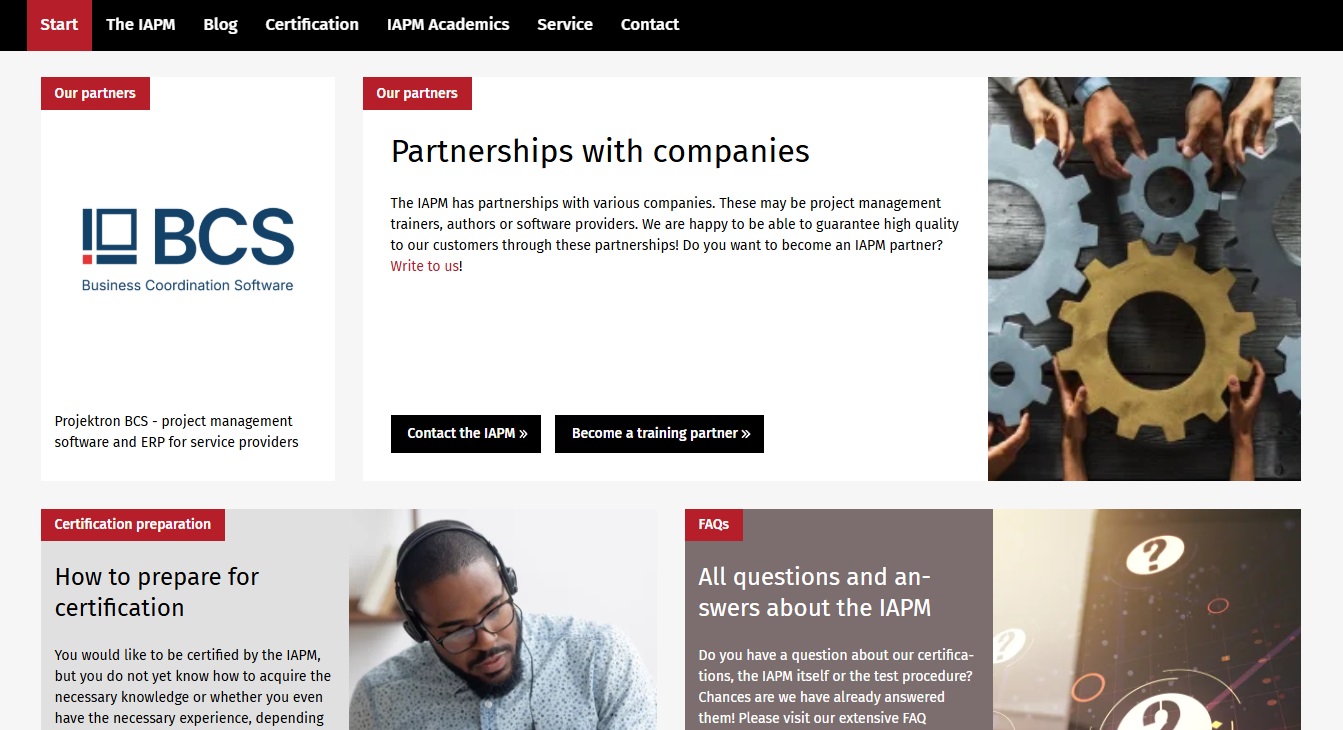
Method-agnostic certification is particularly beneficial when the tools used also support this flexibility. The IAPM does not mandate any single project management software solution. For organizations that operate in a method-agnostic manner, tools that support classic, agile, and hybrid approaches within a single solution are of particular interest. This is precisely where BCS comes in. On its homepage, the IAPM lists various corporate partnerships and explicitly mentions BCS, the business coordination software from Projektron.
BCS enables project teams to flexibly combine different project management models. Traditional project planning with milestones and resource management can be mapped just as easily as agile working methods with iterative processes. At the same time, organizations can individually configure their own project structures and processes. This makes BCS a good fit for the requirements arising from an IAPM-oriented approach. The software does not force project teams into a rigid model, but rather supports precisely the flexibility that is also inherent in the IAPM’s certification approach.
For companies, this means that those who opt for an open-methodology project management certification should also ensure that their software is equally flexible. Solutions like BCS provide a solid foundation for consistently applying these principles in day-to-day project work.
Conclusion & Recommendation Regarding IAPM Certification
The IAPM certification is a modern, flexible, and highly accessible project management certification. It stands out for its online availability, its unlimited validity, and its suitability for a wide range of project scenarios. It is precisely this combination that makes it particularly attractive to many professionals and managers.
IAPM certification is particularly worthwhile for beginners, aspiring project managers, SMEs, consultants, hybrid teams, and anyone who does not want to commit to a single framework. One caveat remains: In highly standardized environments, you should additionally verify which specific certifications are required. Overall, however, the conclusion is clearly positive: The IAPM is a reputable, internationally recognized certification option that is well-suited for many practical settings.
FAQ – IAPM Project Management and IAPM Certification
What is IAPM?
IAPM is an international project management organization that offers methodology-independent certifications. Its goal is to provide practical skills regardless of specific frameworks.
How does IAPM certification work?
The exam is conducted online as a multiple-choice test and can be taken flexibly. After passing, you receive a certificate with unlimited validity.
What certifications does IAPM offer?
IAPM offers certifications from Junior to Senior Project Manager, as well as agile and international variants for different experience levels.
Who is IAPM certification for?
It is especially suitable for beginners, project team members, and project managers who prefer a methodology-independent approach, as well as for organizations with flexible or hybrid project structures.
Is IAPM certification worth it?
Yes—especially if you are looking for a flexible, quickly attainable, and cost-effective certification. It is ideal for methodology-independent project environments but does not always replace established certifications in highly standardized organizations.
How recognized is IAPM?
IAPM is internationally active but less well known than PMI or IPMA. In the DACH region and in flexible project environments, it is gaining increasing relevance.
What distinguishes IAPM from PMI or PRINCE2?
IAPM is not tied to a fixed framework. In contrast, PMI and PRINCE2 focus more on structured models and standardized methodologies.
Does IAPM certification need to be renewed?
No. The certificates are valid indefinitely and do not require recertification, but they also do not provide a formal proof of ongoing professional development.
What software fits IAPM?
Flexible tools that support both traditional and agile projects are suitable. Solutions like BCS enable methodology-independent project management.

About the Author
Like all departments at Projektron GmbH, the marketing team uses the modern project management and ERP software BCS to efficiently implement content, campaigns, and projects. Kai Sulkowski is an experienced editor in the marketing department and regularly keeps abreast of the latest developments in project management: from certifications such as the IAPM to practical requirements in traditional, agile, and hybrid project environments. He has also published several professional articles on the IAPM blog.
More interesting articles on the Projektron blog
Certifications in Project Management
Certifications in project management are more than just a formality: they make competence visible, support career development, and establish standards within teams. Find out when they provide real value and where their limitations lie in this article.
Projects Based on PMI’s PMBOK
The PMI’s PMBOK Guide is one of the globally recognized standards in project management. In its seventh edition, it presents a new approach. Learn how to manage your projects in accordance with PMBOK.
PRINCE2 in Project Management
PRINCE2 is a process-oriented project management method that can be scaled and places project benefits at the center. Our expert article provides an introduction to the core concept, strengths, and weaknesses of PRINCE2.

Hybrid Project Management
Traditional or agile? If the choice between these two approaches is difficult, a combination of two or more project management methods is likely the right solution. Learn everything about hybrid project management in this article.
IAPM certification stands for method-agnostic project management, flexible online exams and lifelong validity – a practical alternative to PMI, PRINCE2 and IPMA.